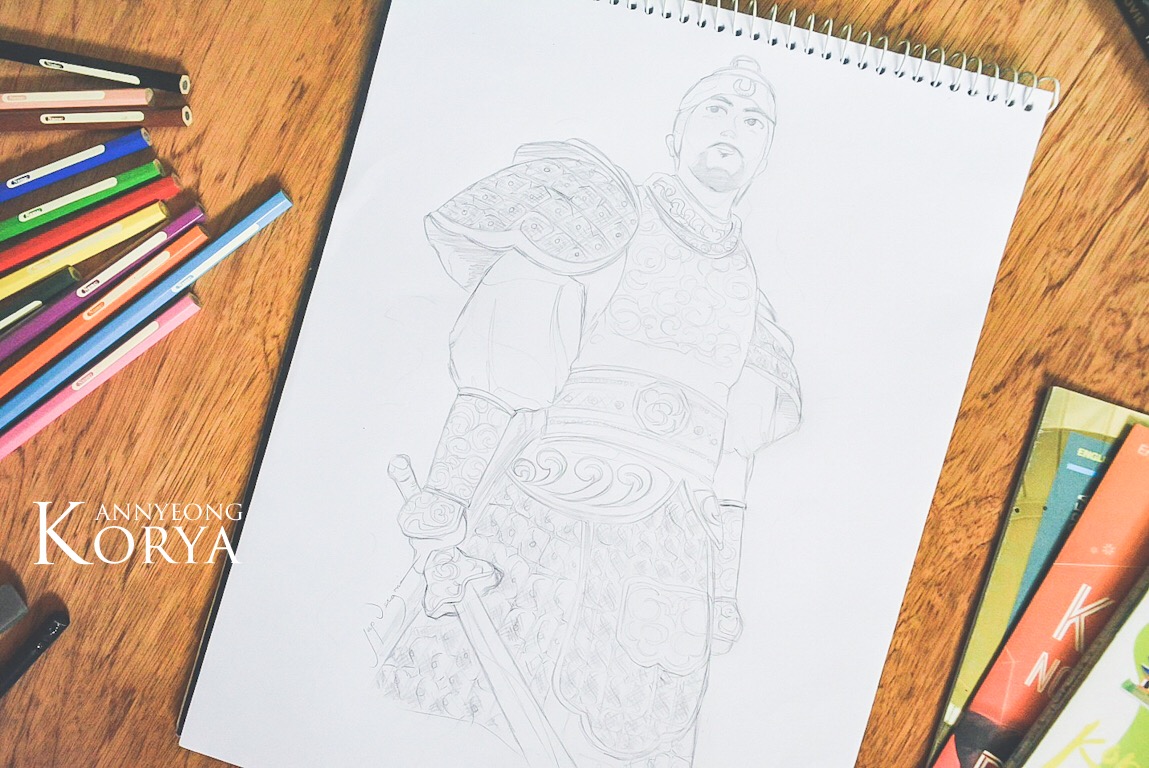
Sageuk are generally based on historical archives and one of these is the remarkably detailed Annals of the Choson Dynasty. It’s the daily record of the nearly 500-year reign of the longest dynasty of Korea that documents the headship of the Joseon kings. These historical records and manuscripts were accurately recorded by historiographers called sagwan so it is exceptionally rich in content and this is why these annals are the core source of various historical period set drama series and films nowadays. If you have watched some sageuk, you’ll probably noticed the palace historiographers that wherever the king goes, they follow along with their papers and ink brushes to record his daily activities and state affairs.
Joseon Dynasty
Joseon, officially the Kingdom of Great Joseon (1392-1897), is the last dynasty that ruled over Korea for about five centuries. It’s the longest ruling dynastic state based on the ideology of Neo Confucianism in which enormous progress have been recorded in the history of Korea particularly the foundation of its classical culture, art, literature, education, early science and technology, and its society.
After nearly 500 years of Goryeo’s rule, the kingdom concluded with the founding of Joseon. Born as Yi Seong-gye, Yi Dan was the founder and first king of the Joseon Dynasty that revived the legendary kingdom of Gojoseon (2333 BC-108 BC). The then General Yi Seong-gye gained his power through his contribution in the military which later led a coup d'etat that resulted in the dethronement of previous rulers particularly his puppet king Gongyang of Goryeo (r. 1389-1392). King Gongyang was exiled to Wonju along with his family where they all ended up murdered. Following the seized of the throne, Yi Seong-gye has found an alliance with aristocrats Jeong Do-jeon and Jo Jun who were also became instrumental in his ascension in the Joseon throne as King Taejo (r. 1392-1398). A part of King Taejo’s reign is depicted in the blockbuster historical period feature film ‘The Pirates.’
The conflict in politics between Jeong Do-jeon, who was involved in helping King Taejo to establish Joseon, and Prince Yi Bang-won, who wanted an absolute power and will later reign as King Taejong of Joseon (r. 1400-1418), was portrayed in the popular Korean drama series ‘Six Flying Dragons.’ Meanwhile, its loose sequel ‘Deep Rooted Tree’ is centered on the early years of King Sejong (r. 1418-1450) specifically his reign after his grandfather King Taejong’s headship and the depiction of the historic creation of the Korean alphabet Hangeul until it was introduced to the public that helped many commoners of Joseon to learn how to write and read. Moreover, King Sejong's more in-depth life story is depicted in the sageuk ‘King Sejong the Great’ where in his enthronement as Joseon king and his huge contributions to the nation’s flourishing culture and heritage was exceptionally portrayed.
Joseon scientist ‘Jang Yeong-sil’ is illustrated in a self-title drama series. When King Sejong the Great passed a policy on national civil service where the selection of officials for government posts will be based on their talent and not by their social class, Jang Yeong-sil successfully entered the royal palace and worked at the Hall of Worthies despite being a commoner born. In Joseon, inventor Jang showed his potential and made great contributions to the advancement of science and technology of the early modern Joseon. Some of his notable inventions include the honcheoni celestial globe used in astronomy, iron-made printing press gabinja, jagyeokru water clock, agbu ilgu sundial, cheugugi rain gauge, and significant research on the progress of Joseon’s weaponry.
Moreover, the story of Joseon’s first female royal doctor was chronicled in the hit historical television drama series ‘Dae Jang Geum,’ more widely known as ‘Jewel in the Palace.’ Besides the Joseon physician's journey, the life and politics inside the royal palace, and the thriving culture and traditions unique to Korea including its inviting royal court cuisine and traditional medicine were also showcased in the sageuk. While it‘s loosely centered on Dae Jang Geum’s life, the drama also chronicled the ruling years of many Joseon kings, from the reigns of King Seongjong (r. 1469-1494) and Yeonsangun (r. 1494-1506) until the time in power of King Myeongjong (r. 1545-1567) as the 13th king of Joseon. Dae Jang Geum is one of the sageuk dramas that best represents the grandeur and dynastic rule of the Joseon nation which has earned huge viewership globally.
King Sejong’s sons, Grand Prince Suyang who will reign as King Sejo (r. 1455-1468), the 7th king of Joseon dynasty, and Grand Prince Anpyeong is depicted in the historical period drama series ‘Grand Prince’ in which the story was roughly based in their life as princes and rivalry in the Joseon throne. Yeonsangun, the 10th monarch of Joseon, who was the eldest son of King Seongjong by his second wife, is illustrated in the Korean stage play turned into movie ‘King and the Clown.’ Set in the 15th century, the story is loosely based on the favorite court clown of the Joseon king named Gong-gil who was mentioned in the annals. In history, Yeonsangun is often regarded as the worst ruler of Joseon for disgracefully leading the killings of elite scholars and bringing many women to serve as entertainers inside his palace. Relevantly, as gisaeng are common entertainers during the Joseon period, one drama series that best depicts their typical lifestyle is ‘Hwang Jini’ which was set during the reign of King Jungjong (r. 1506-1544). Hwang Jini, also known by her gisaeng name Myeongwol, or 'Bright Moon,' was one of the most famous gisaeng of Joseon who is said to be with exceptional beauty and intelligence.
The kings of Joseon with interesting stories are undoubtedly the most portrayed in sageuk dramas and movies. One of them is the tragic life story of Prince Gwanghae of Joseon (r. 1608-1623) who was deposed from Joseon throne in a coup and later exiled in the island of Jeju due to the feuds between political factions during his reign. Born with the name Yi Hon, the realistic ruler Gwanghaegun was the second son of King Seonjo (r. 1567-1608) to royal concubine Lady Kim Gongbin. Gwanghaegun, the 15th king of Joseon, along with his contentious relationship with his father King Seonjo who is recognized in reforming taxation laws and his efforts in the Seven Year War (1592-1598) between the Ming Empire of China and Japan over the Korean peninsula are loosely depicted in various hit Korean historical period dramas such as ‘Splendid Politics’ and ‘The King's Face’ including the blockbuster Korean sageuk films ‘Warriors of the Dawn’ and ‘Masquerade.’ Although the latter film about Gwanghaegun is merely fictional, it still depicts the glory days of the Joseon king.
Korea’s highest grossing film of all time ‘The Admiral: Roaring Currents’ which was based on the legendary feat of the historical figure and naval commander Yi Sun-sin (1545-1598) was also set during King Seonjo's reign. The sageuk film revolves around the historic Battle of Myeongnyang during the Imjin War in 1597 which was regarded as the admiral's greatest naval victories for successfully defeating more than 300 Japanese vessels against his own fleet of 13 ships. Besides, the drama series ‘Goddess of Fire, Jung Yi’ which showcases the magnificent pottery and craft of the Joseon-made white porcelains was also set during Prince Gwanghae’s reign. It depicts the real-life historical figure Baek Pa-sun, renowned first female potter and porcelain artist of Joseon who was appointed as china craft maker for the royal family. BaekPa-sun was among the Korean artisans captured in force by the Japanese during their invasion in 1592 and who continued their craft in pottery in the foreign land.
Shin Saimdang (1504-1551) is also a notable historical figure of the Korean history in which her inspiring story is represented in the sageuk drama ‘Shin Saimdang: Memoir of Colors.’ Although the famous Joseon era-artist, poet and calligrapher's life is loosely portrayed in the television series, the story showcased her contributions in Korean culture and history as well as the portrayal of being a wise, loving, and wonderful mother to her children and Yi I (1536-1584), her son who later became a prominent Korean Confucian scholar and was also portrayed in the drama in his early childhood. Some of her poetry works, remarkable paintings, and the treasured Goryeo paper were also featured as part of the well-plot sageuk. In the modern day, for her achievements and legacy, Shin Saimdang is the first woman to be included on Korea's official banknotes, the 50,000 Korean won note in particular, along with his son Yi I who appeared in the current 5,000 Korean won.
Significant events in Korean history are as well illustrated in some historical period dramas. The Second Manchu Invasion of Korea (1636) is depicted in the novel turned into film ‘The Fortress’ where King Injo (r. 1623-1649), the 16th king of Joseon, and his followers seek refuge in the Namhansanseong fortress. After the Qing invasion of Joseon which occurred in 1636, it gave a way to yet another invasion of Manchu where the historical period film ‘War of the Arrows’ was set. Archery has long been used by Korean warriors during the olden times in which the film was heavily focused on.
During the dynasties of Korea, besides the queen, it was common for kings to have many concubines especially if they have no heirs to take over the throne. In sageuk dramas, the queen’s conflict with royal concubines is often portrayed but it is uncommon that their life stories are showcase in a drama series. Few of these are the historical television series ‘Jang Ok-jeong: Living by Love’ and ‘Dong Yi’ which are loosely based on real life historical figures and Joseon's best known royal noble consorts Jang Ok-jeong(1659-1701) and Choi Suk-bin (1670-1718) respectively. In history, the two concubines had conflict over the royal power which resulted in the death of Jang Ok-jeong in favor of Lady Choi by King Sukjong (r. 1674-1720). Choi Suk-bin's second son Prince Yeoning was crowned as King Yeongjo of Joseon (r. 1724-1776), the 21st Joseon king, who was the father of Crown Prince Sado and grandfather of Yi San.
The reigns of King Yeongjo, Crown Prince Sado and his son Yi San, the future 22nd ruler of Joseon as King Jeongjo (r. 1776-1800), is dramatized in the sageuk ‘Secret Door’ and ‘Yi San: Wind of the Palace.’ In the two Korean drama series, the conflicted relationship between the king father and his crown prince son as well as the later King Jeongjo's rise to Joseon kingship is greatly depicted.
Other than that, the ‘Painter of the Wind’ set during the reign of King Jeongjo was centered loosely on the story of Shin Yun-bok (1758-1813), a realistic painter during his time in which he is compared to renowned Joseon painters Danwon and Geungjae. In the drama series, around forty notable paintings such as Shin Yun-bok's Gidalim (Waiting) and Kim ‘Danwon’ Hongdo's Songhamaenghodo (Drunkard Under a Tree) were featured to showcase the astounding craftsmanship and painting skills of Korean painters in the early times.
There are more Korean historical period dramas and films showcasing the other aspects of the early modern period of Joseon such as the ‘Moon Embracing the Sun,’ which shows the old practice of shamanism against the power of faith, and the novel-based drama ‘The Merchant Gaekju,’ which chronicles the lives of peddlers during the period in which the story centers on the conflict that most common Joseon traders are facing against the most powerful in business and trading. In addition to, ‘The Royal Gambler,’ also known as ‘Jackpot,’ portrays the gambling world in the Joseon era while the historical period film ‘The Royal Tailor’ tells the conflict story of two great tailors of Sanguiwon where the royal attire and hanbok were made during the Joseon dynasty. The sageuk film showcases the elegance of hanbok, or the traditional Korean clothing used by the Joseon royalties. Even though these content are mostly not based on real life stories, they still represents significant part of Korea’s culture and history as a whole.
Korean Empire
‘Gunman of Joseon’ was set in the newly transitioned Korean Empire (1897-1910) under the third year reign of Gojong (r. 1863-1907), the last king of Joseon (r. 1863-1897) and first Emperor of Korea (r. 1897-1907). While the historical drama is not based on life story, the rapid progress and modernization of the later dynasty particularly the introduction of more advanced weaponry is depicted. Even though the drama series centers on the theme of fictional romance, it’s still centered on politics set within the era of the longest dynasty of Korea.
Empress Myeongseong (1851-1895), the first official wife of King Gojong and the last Empress of Korea, was portrayed in the self-titled television drama series ‘Empress Myeongseong’ and in the historical film ‘The Sword with No Name.’ In October 1895, she was assassinated at a private royal residence inside the Gyeongbok Palace by the Japanese agents under Miura Goro, which is known today as the Eulmi Incident. ‘The Last Princess,’ which was set in the later years of the dynasty, is also a remarkable sageuk as it depicts the life of Deokhye in Japan as the last princess of Joseon including a part of the life story of Emperor Sunjong of Korea (r. 1907-1910), the 2nd and last emperor of the Korean Empire. In the drama series, it chronicles how she was forcibly brought to Japan at a young age of 13 by the then Japanese Imperial government and her endeavour to finally return back home in Korea. The Korean Empire was abolished on August 29, 1910 and which ended the 519 years of reign of the Joseon dynasty.
These sageuk dramas and films are only a few of the many that are worth watching as they are of significance to the history of Korea. Although they are mostly fictional, they are still worthy to keep track as you will have a fascinating glimpse of Korea's great history and diverse culture that have survived time and series of wars. I have watched most of these sageuk and tracing Korean history from them is quite challenging as you have to consult various references but at the same it’s nurturing as you get to learn so many things. The classical culture, unique heritage, old traditions, beautiful language, life, politics, religion, society, and even the appeal of Korean food, all of these truly represents Korea that we know today.
"Tracing Korea’s great history through sageuk," October 29, 2019 was first published on the Talk Talk Korea web portal. All photos used herein are property of Annyeong Korya which are protected under applicable copyrights.
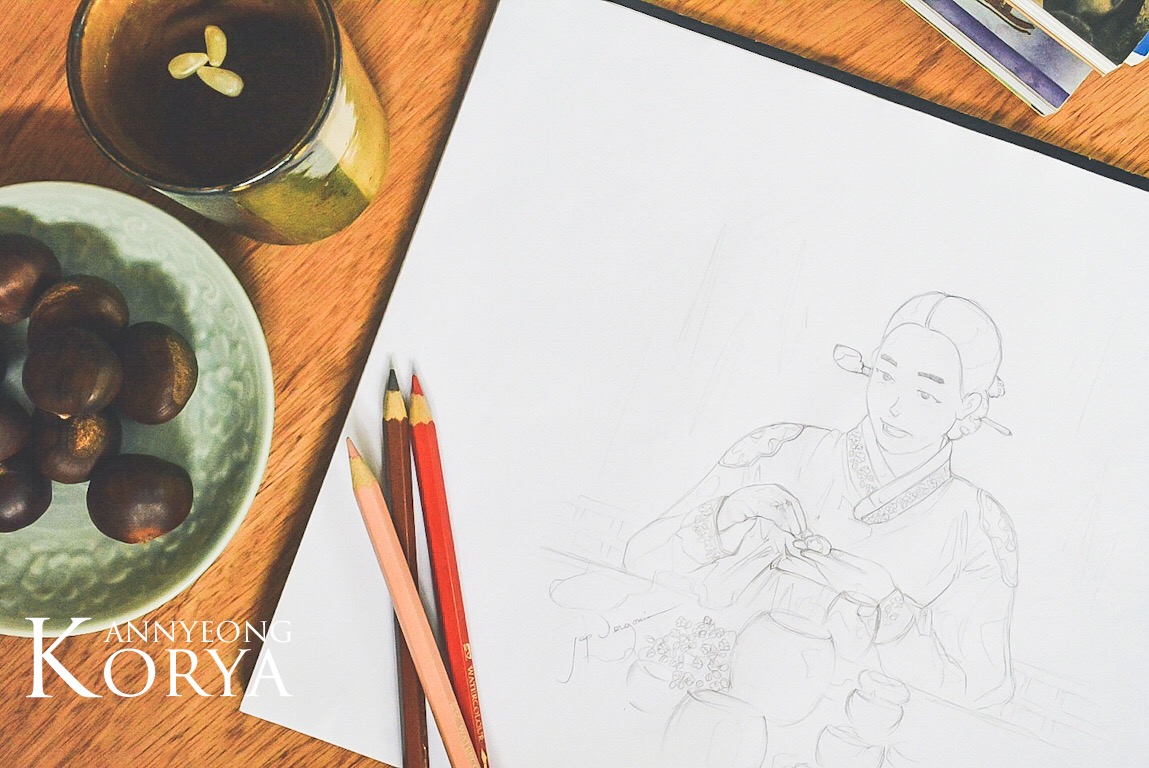 |
| The life story of Empress Myeongseong, official wife of King Gojong and the last Empress of Korea, is portrayed in the self-title drama ‘Empress Myeongseong’and motion film ‘The Sword with No Name.’ |
Joseon Dynasty
Joseon, officially the Kingdom of Great Joseon (1392-1897), is the last dynasty that ruled over Korea for about five centuries. It’s the longest ruling dynastic state based on the ideology of Neo Confucianism in which enormous progress have been recorded in the history of Korea particularly the foundation of its classical culture, art, literature, education, early science and technology, and its society.
After nearly 500 years of Goryeo’s rule, the kingdom concluded with the founding of Joseon. Born as Yi Seong-gye, Yi Dan was the founder and first king of the Joseon Dynasty that revived the legendary kingdom of Gojoseon (2333 BC-108 BC). The then General Yi Seong-gye gained his power through his contribution in the military which later led a coup d'etat that resulted in the dethronement of previous rulers particularly his puppet king Gongyang of Goryeo (r. 1389-1392). King Gongyang was exiled to Wonju along with his family where they all ended up murdered. Following the seized of the throne, Yi Seong-gye has found an alliance with aristocrats Jeong Do-jeon and Jo Jun who were also became instrumental in his ascension in the Joseon throne as King Taejo (r. 1392-1398). A part of King Taejo’s reign is depicted in the blockbuster historical period feature film ‘The Pirates.’
 |
| A scene in the drama series ‘Deep Rooted Tree’ where in King Sejong the Great speaks with So-yi who helped him in the creation of Hangeul. King Sejong of Joseon is credited in the invention of Hangeul, or the official Korean alphabet. |
The conflict in politics between Jeong Do-jeon, who was involved in helping King Taejo to establish Joseon, and Prince Yi Bang-won, who wanted an absolute power and will later reign as King Taejong of Joseon (r. 1400-1418), was portrayed in the popular Korean drama series ‘Six Flying Dragons.’ Meanwhile, its loose sequel ‘Deep Rooted Tree’ is centered on the early years of King Sejong (r. 1418-1450) specifically his reign after his grandfather King Taejong’s headship and the depiction of the historic creation of the Korean alphabet Hangeul until it was introduced to the public that helped many commoners of Joseon to learn how to write and read. Moreover, King Sejong's more in-depth life story is depicted in the sageuk ‘King Sejong the Great’ where in his enthronement as Joseon king and his huge contributions to the nation’s flourishing culture and heritage was exceptionally portrayed.
Joseon scientist ‘Jang Yeong-sil’ is illustrated in a self-title drama series. When King Sejong the Great passed a policy on national civil service where the selection of officials for government posts will be based on their talent and not by their social class, Jang Yeong-sil successfully entered the royal palace and worked at the Hall of Worthies despite being a commoner born. In Joseon, inventor Jang showed his potential and made great contributions to the advancement of science and technology of the early modern Joseon. Some of his notable inventions include the honcheoni celestial globe used in astronomy, iron-made printing press gabinja, jagyeokru water clock, agbu ilgu sundial, cheugugi rain gauge, and significant research on the progress of Joseon’s weaponry.
 |
| Dae Jang Geum, the first female royal physician of Joseon, is depicted in the global hit sageuk television series ‘Jewel in the Palace.’ |
Moreover, the story of Joseon’s first female royal doctor was chronicled in the hit historical television drama series ‘Dae Jang Geum,’ more widely known as ‘Jewel in the Palace.’ Besides the Joseon physician's journey, the life and politics inside the royal palace, and the thriving culture and traditions unique to Korea including its inviting royal court cuisine and traditional medicine were also showcased in the sageuk. While it‘s loosely centered on Dae Jang Geum’s life, the drama also chronicled the ruling years of many Joseon kings, from the reigns of King Seongjong (r. 1469-1494) and Yeonsangun (r. 1494-1506) until the time in power of King Myeongjong (r. 1545-1567) as the 13th king of Joseon. Dae Jang Geum is one of the sageuk dramas that best represents the grandeur and dynastic rule of the Joseon nation which has earned huge viewership globally.
King Sejong’s sons, Grand Prince Suyang who will reign as King Sejo (r. 1455-1468), the 7th king of Joseon dynasty, and Grand Prince Anpyeong is depicted in the historical period drama series ‘Grand Prince’ in which the story was roughly based in their life as princes and rivalry in the Joseon throne. Yeonsangun, the 10th monarch of Joseon, who was the eldest son of King Seongjong by his second wife, is illustrated in the Korean stage play turned into movie ‘King and the Clown.’ Set in the 15th century, the story is loosely based on the favorite court clown of the Joseon king named Gong-gil who was mentioned in the annals. In history, Yeonsangun is often regarded as the worst ruler of Joseon for disgracefully leading the killings of elite scholars and bringing many women to serve as entertainers inside his palace. Relevantly, as gisaeng are common entertainers during the Joseon period, one drama series that best depicts their typical lifestyle is ‘Hwang Jini’ which was set during the reign of King Jungjong (r. 1506-1544). Hwang Jini, also known by her gisaeng name Myeongwol, or 'Bright Moon,' was one of the most famous gisaeng of Joseon who is said to be with exceptional beauty and intelligence.
The kings of Joseon with interesting stories are undoubtedly the most portrayed in sageuk dramas and movies. One of them is the tragic life story of Prince Gwanghae of Joseon (r. 1608-1623) who was deposed from Joseon throne in a coup and later exiled in the island of Jeju due to the feuds between political factions during his reign. Born with the name Yi Hon, the realistic ruler Gwanghaegun was the second son of King Seonjo (r. 1567-1608) to royal concubine Lady Kim Gongbin. Gwanghaegun, the 15th king of Joseon, along with his contentious relationship with his father King Seonjo who is recognized in reforming taxation laws and his efforts in the Seven Year War (1592-1598) between the Ming Empire of China and Japan over the Korean peninsula are loosely depicted in various hit Korean historical period dramas such as ‘Splendid Politics’ and ‘The King's Face’ including the blockbuster Korean sageuk films ‘Warriors of the Dawn’ and ‘Masquerade.’ Although the latter film about Gwanghaegun is merely fictional, it still depicts the glory days of the Joseon king.
Korea’s highest grossing film of all time ‘The Admiral: Roaring Currents’ which was based on the legendary feat of the historical figure and naval commander Yi Sun-sin (1545-1598) was also set during King Seonjo's reign. The sageuk film revolves around the historic Battle of Myeongnyang during the Imjin War in 1597 which was regarded as the admiral's greatest naval victories for successfully defeating more than 300 Japanese vessels against his own fleet of 13 ships. Besides, the drama series ‘Goddess of Fire, Jung Yi’ which showcases the magnificent pottery and craft of the Joseon-made white porcelains was also set during Prince Gwanghae’s reign. It depicts the real-life historical figure Baek Pa-sun, renowned first female potter and porcelain artist of Joseon who was appointed as china craft maker for the royal family. BaekPa-sun was among the Korean artisans captured in force by the Japanese during their invasion in 1592 and who continued their craft in pottery in the foreign land.
Shin Saimdang (1504-1551) is also a notable historical figure of the Korean history in which her inspiring story is represented in the sageuk drama ‘Shin Saimdang: Memoir of Colors.’ Although the famous Joseon era-artist, poet and calligrapher's life is loosely portrayed in the television series, the story showcased her contributions in Korean culture and history as well as the portrayal of being a wise, loving, and wonderful mother to her children and Yi I (1536-1584), her son who later became a prominent Korean Confucian scholar and was also portrayed in the drama in his early childhood. Some of her poetry works, remarkable paintings, and the treasured Goryeo paper were also featured as part of the well-plot sageuk. In the modern day, for her achievements and legacy, Shin Saimdang is the first woman to be included on Korea's official banknotes, the 50,000 Korean won note in particular, along with his son Yi I who appeared in the current 5,000 Korean won.
Significant events in Korean history are as well illustrated in some historical period dramas. The Second Manchu Invasion of Korea (1636) is depicted in the novel turned into film ‘The Fortress’ where King Injo (r. 1623-1649), the 16th king of Joseon, and his followers seek refuge in the Namhansanseong fortress. After the Qing invasion of Joseon which occurred in 1636, it gave a way to yet another invasion of Manchu where the historical period film ‘War of the Arrows’ was set. Archery has long been used by Korean warriors during the olden times in which the film was heavily focused on.
During the dynasties of Korea, besides the queen, it was common for kings to have many concubines especially if they have no heirs to take over the throne. In sageuk dramas, the queen’s conflict with royal concubines is often portrayed but it is uncommon that their life stories are showcase in a drama series. Few of these are the historical television series ‘Jang Ok-jeong: Living by Love’ and ‘Dong Yi’ which are loosely based on real life historical figures and Joseon's best known royal noble consorts Jang Ok-jeong(1659-1701) and Choi Suk-bin (1670-1718) respectively. In history, the two concubines had conflict over the royal power which resulted in the death of Jang Ok-jeong in favor of Lady Choi by King Sukjong (r. 1674-1720). Choi Suk-bin's second son Prince Yeoning was crowned as King Yeongjo of Joseon (r. 1724-1776), the 21st Joseon king, who was the father of Crown Prince Sado and grandfather of Yi San.
The reigns of King Yeongjo, Crown Prince Sado and his son Yi San, the future 22nd ruler of Joseon as King Jeongjo (r. 1776-1800), is dramatized in the sageuk ‘Secret Door’ and ‘Yi San: Wind of the Palace.’ In the two Korean drama series, the conflicted relationship between the king father and his crown prince son as well as the later King Jeongjo's rise to Joseon kingship is greatly depicted.
Other than that, the ‘Painter of the Wind’ set during the reign of King Jeongjo was centered loosely on the story of Shin Yun-bok (1758-1813), a realistic painter during his time in which he is compared to renowned Joseon painters Danwon and Geungjae. In the drama series, around forty notable paintings such as Shin Yun-bok's Gidalim (Waiting) and Kim ‘Danwon’ Hongdo's Songhamaenghodo (Drunkard Under a Tree) were featured to showcase the astounding craftsmanship and painting skills of Korean painters in the early times.
There are more Korean historical period dramas and films showcasing the other aspects of the early modern period of Joseon such as the ‘Moon Embracing the Sun,’ which shows the old practice of shamanism against the power of faith, and the novel-based drama ‘The Merchant Gaekju,’ which chronicles the lives of peddlers during the period in which the story centers on the conflict that most common Joseon traders are facing against the most powerful in business and trading. In addition to, ‘The Royal Gambler,’ also known as ‘Jackpot,’ portrays the gambling world in the Joseon era while the historical period film ‘The Royal Tailor’ tells the conflict story of two great tailors of Sanguiwon where the royal attire and hanbok were made during the Joseon dynasty. The sageuk film showcases the elegance of hanbok, or the traditional Korean clothing used by the Joseon royalties. Even though these content are mostly not based on real life stories, they still represents significant part of Korea’s culture and history as a whole.
Korean Empire
‘Gunman of Joseon’ was set in the newly transitioned Korean Empire (1897-1910) under the third year reign of Gojong (r. 1863-1907), the last king of Joseon (r. 1863-1897) and first Emperor of Korea (r. 1897-1907). While the historical drama is not based on life story, the rapid progress and modernization of the later dynasty particularly the introduction of more advanced weaponry is depicted. Even though the drama series centers on the theme of fictional romance, it’s still centered on politics set within the era of the longest dynasty of Korea.
Empress Myeongseong (1851-1895), the first official wife of King Gojong and the last Empress of Korea, was portrayed in the self-titled television drama series ‘Empress Myeongseong’ and in the historical film ‘The Sword with No Name.’ In October 1895, she was assassinated at a private royal residence inside the Gyeongbok Palace by the Japanese agents under Miura Goro, which is known today as the Eulmi Incident. ‘The Last Princess,’ which was set in the later years of the dynasty, is also a remarkable sageuk as it depicts the life of Deokhye in Japan as the last princess of Joseon including a part of the life story of Emperor Sunjong of Korea (r. 1907-1910), the 2nd and last emperor of the Korean Empire. In the drama series, it chronicles how she was forcibly brought to Japan at a young age of 13 by the then Japanese Imperial government and her endeavour to finally return back home in Korea. The Korean Empire was abolished on August 29, 1910 and which ended the 519 years of reign of the Joseon dynasty.
These sageuk dramas and films are only a few of the many that are worth watching as they are of significance to the history of Korea. Although they are mostly fictional, they are still worthy to keep track as you will have a fascinating glimpse of Korea's great history and diverse culture that have survived time and series of wars. I have watched most of these sageuk and tracing Korean history from them is quite challenging as you have to consult various references but at the same it’s nurturing as you get to learn so many things. The classical culture, unique heritage, old traditions, beautiful language, life, politics, religion, society, and even the appeal of Korean food, all of these truly represents Korea that we know today.
"Tracing Korea’s great history through sageuk," October 29, 2019 was first published on the Talk Talk Korea web portal. All photos used herein are property of Annyeong Korya which are protected under applicable copyrights.